Types of Hiking, Benefits, and the Best Activities to Enrich Every Trail
Types of Hiking, Benefits, and the Best Activities to Enrich Every Trail
Hiking is not a single activity — it is a family of pursuits, each with its own demands, rewards, and rituals. Understanding the spectrum helps you choose the right trail for the right reason.
| Primary keyword | types of hiking and benefits | ~1700 words |
| Search intent | Informational — hikers researching different hiking styles, health benefits, and activities to do on a hike. |
The Spectrum of Hiking — A Guide to Every Style
1. Day Hiking
Day hiking — a single-day outing requiring no overnight equipment — is the most accessible form of the activity and the natural starting point for most people. Routes range from gentle two-hour nature walks to ambitious 25km circuits covering 1,500m of elevation gain. In Kenya, the Ngong Hills, Karura Forest, Hell's Gate National Park, and the lower slopes of the Aberdares serve as popular weekend day-hiking destinations within easy reach of Nairobi.
Day hiking is ideal for beginners, families, social groups, and fitness-focused hikers who want the rewards of the outdoors without the logistical complexity of overnight camping. A well-prepared daypack (15–25L with 2L water, snacks, a rain layer, and a first aid kit) is sufficient for most routes.

2. Backpacking (Multi-Day Hiking)
Backpacking — carrying everything needed for multiple days of travel on your back — is arguably the purest form of hiking. It demands more planning, fitness, and gear, but delivers something a day hike cannot: the experience of waking deep in the wilderness, far from roads and phones, with an entire day of mountains ahead. Kenya's Mount Kenya circuit (3–7 days), the Aberdare traverses, the Cherangani Hills in western Kenya, and Tanzania's Crater Highlands offer remarkable multi-day routes.
PACK WEIGHT TARGET For comfort and joint protection, your total loaded pack weight — including food, water, and gear — should not exceed 20–25% of your body weight. Experienced backpackers target a "base weight" (everything except consumables) under 7kg. |
3. Alpine and Summit Hiking
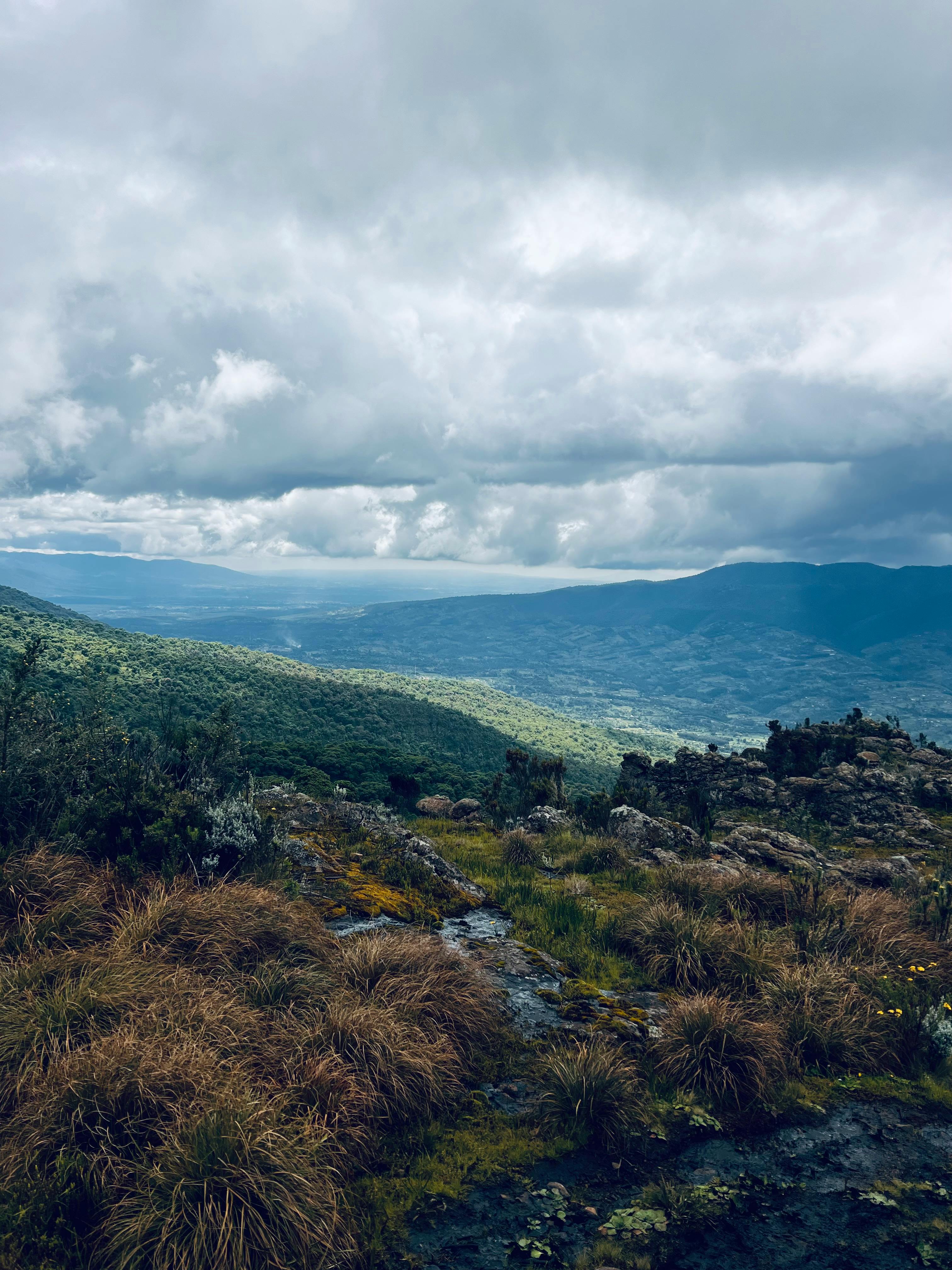
Alpine hiking involves ascending mountain terrain to a high point, often above the treeline, crossing the raw volcanic rock and remnant glaciers of the high alpine zone. In East Africa, this includes Mount Kenya (5,199m), Kilimanjaro (5,895m), Mount Elgon (4,321m), and the Rwenzori Mountains (5,109m). These hikes blend sustained endurance effort with altitude management, route-finding, and — on the highest routes — technical scrambling. Most classic East African summit routes are non-technical "walk-ups" but remain serious undertakings requiring preparation and respect.

4. Trail Running
Trail running applies a running pace to off-road terrain, blending athletic performance with the freedom and beauty of natural paths. Kenya's trail running community is growing rapidly, with organised races on Karura Forest trails, the Ngong Hills, and increasingly on the slopes of Mount Kenya. Trail running requires specific lower-profile footwear and a higher fitness baseline than hiking, but opens up more terrain in less time. It provides an exceptional cardiovascular stimulus and is particularly popular among Nairobi-based athletes as a weekend escape from urban roads.
5. Nature and Wildlife Walking
Nature walking occupies the contemplative, unhurried end of the hiking spectrum — purposeful movement through natural environments with the primary aim of observation rather than athletic achievement. Birdwatching walks, botanical trails, and guided wildlife walks within national parks and conservancies all fall under this category. In Kenya, a slow walk through the Kakamega Forest, the Ol Pejeta Conservancy, or the forests of the Laikipia Plateau can deliver encounters with extraordinary biodiversity that faster-paced hiking simply doesn't permit.
The Health Benefits of Hiking — What the Science Shows
The evidence base for hiking's health benefits spans physical, psychological, and social dimensions. Regular hiking is among the most complete, accessible, and evidence-supported forms of human exercise available.
Physical Benefits
- Improves cardiovascular fitness: a single 90-minute hike measurably improves VO2 max when performed regularly
- Strengthens lower body: glutes, quadriceps, hamstrings, and calves are all recruited on varied terrain
- Improves bone density: weight-bearing impact on trails stimulates bone remodelling, reducing osteoporosis risk
- Burns 300–600+ calories per hour depending on pace, weight, and terrain — more than walking on flat surfaces
- Improves balance and proprioception: uneven terrain trains the stabilising muscles and the vestibular system

Mental and Cognitive Benefits
- Reduces cortisol (the primary stress hormone) significantly — a single 90-minute hike shows measurable cortisol reduction
- Decreases rumination and negative self-focused thinking, particularly in nature-based settings versus urban walks
- Boosts creative problem-solving: Stanford research showed a 60% increase in creative output after walking in nature
- Improves mood via endorphin, serotonin, and dopamine release — colloquially the "hiker's high"
- Reduces symptoms of clinical depression and anxiety with regular outdoor walking programmes
- Attention restoration theory: natural environments replenish directed attention capacity depleted by urban demands
Activities to Enrich Your Hike
Birdwatching
Kenya is one of the world's premier birdwatching destinations, hosting over 1,100 recorded species — more than the entire European continent. Carry 8×42 binoculars and download the Merlin Bird ID app by Cornell Lab, which identifies birds by audio recording in real time. Move slowly and periodically stop to listen. Look for sunbirds working flowering heathers on moorlands, raptors on thermals above open grassland, and hornbills in montane forest. The Aberdare forest, Kakamega rainforest, and the lower slopes of Mount Kenya are exceptional birding territories.
Photography
The golden hours — the 60 minutes after sunrise and before sunset — transform ordinary landscapes into extraordinary ones. Plan hike timing to begin before dawn and return before midday, or to be at a high viewpoint at dusk. Apply compositional principles: leading lines (trails, ridgelines, rivers), foreground interest (rocks, flowers, people), and deliberate framing. The Rift Valley escarpment at dawn, Mount Kenya's glaciers catching alpenglow, and the surreal lobelia forests of the Aberdares above 3,000m are world-class photographic subjects.

Journaling and Mindful Observation
A small field notebook carried consistently becomes, over years, one of the most valuable personal records a hiker can possess. Note weather, light, wildlife encountered, thoughts provoked. Research shows that mindful hiking — walking with full sensory attention, periodically pausing in silence without devices — produces measurably greater psychological benefit than walking while listening to audio. Designate portions of every hike as phone-free and attend fully to the present environment.
Stargazing
Kenya's equatorial position and dark skies far from city light pollution make it a world-class stargazing destination. The Milky Way is visible to the naked eye from most highland locations on moonless nights. The Laikipia Plateau, Maasai Mara borders, and the moorlands above 3,500m on Mount Kenya offer spectacular dark-sky experiences. The Southern Cross is visible year-round; the Magellanic Clouds (satellite galaxies of the Milky Way) appear in the southern sky; Jupiter and Saturn are reliable naked-eye objects.
Cultural Encounters
Some of Kenya's most profound hiking experiences involve not landscapes but people. Routes through Maasai group ranches, Kikuyu highland communities, and Samburu territory with a local guide open windows onto traditional land use, ecological knowledge, and cultural practices that have coexisted with these landscapes for generations. Community-based tourism in Laikipia and the Rift Valley channels hiking revenue directly to local households — a more ethical and more enriching form of outdoor recreation.

Citizen Science
The iNaturalist app allows you to photograph and catalogue any plant, animal, or fungus encountered on the trail, contributing directly to biodiversity databases used by researchers worldwide. The Kenya Bird Map, the Mount Kenya Trust's trail monitoring programmes, and various butterfly and mammal surveys all welcome volunteer hikers as data collectors. This transforms every hike into a contribution to conservation science.
"In every walk with nature, one receives far more than they seek." — John Muir
Comments (0)
No comments yet. Be the first to share your thoughts!
You Might Also Like
How to Prepare for a Hike
May 27, 2026